.png)


SPOTLIGHT: MAGGIE K DE MONDE AKA SCARLET FANTASTIC

Updated: May 6

MUSICIAN
SINGER
SONGWRITER
PERFORMER
BIO:

Maggie K De Monde is a true generational icon — a British singer, songwriter, and performer whose influence has shaped the sound and style of multiple eras. Rising to prominence in the 1980s with the avant‑pop trio Swans Way and later the cult favourite Scarlet Fantastic, she first cut her teeth with Playthings, a band that famously supported Duran Duran in their earliest days.
Her creative reach has always extended far beyond music. Maggie has presented radio and television programmes, modelled live on This Morning, and even appeared on the big screen in the Hugh Grant film About a Boy. A natural storyteller and a magnetic presence, she has continually reinvented herself while staying unmistakably true to her artistic spirit.
With her latest album, From Montreal to Rotherham, Maggie once again proves that her evolution is far from over. Four decades into her career, she remains a fearless, forward‑moving artist — still creating, and still inspiring.
Q&As

DG Q: Let’s begin with your latest project, before rewinding back through your career! Your new album ‘From Montreal to Rotherham”, released in March 2026, marks an extraordinary milestone: four decades of musical evolution distilled into one compelling collection. Written and produced by you, with inspired contributions from John Walters (Landscape), Basil Gabbidon (Steel Pulse), and the mixing finesse of Hifi Sean (The Soup Dragons), it’s a richly layered piece of work. What sparked the creative fire behind this brilliantly crafted album, and what stories shaped its sound?
MKD: Thank you D.G! I always express myself through my songwriting. Everything that I see, feel, experience and think about usually ends up in a song. I had started writing some of these songs during covid, so working with other musicians wasn’t easy during that period.
My songs were inspired through personal loss and personal joy and the belief and hope that things would get better, hence my song “Better Day.” Once restrictions were lifted, and I was able to be in the same room as other musicians, I began recording my songs with them. I used mainly local musicians, singers and friends as there are some amazingly talented players in Eastbourne. I have a fantastic recording engineer who I work with, Sean Horsefield, and after all the musical parts and vocals were recorded, my dear friend Hifi Sean mixed the tracks and added some production. Sometimes, I marvel at how it all came together as it was a very ad hoc process. My piano player for this album, Rick Pentecost, was a very important contributor, his piano playing on many of the songs helped shape the sound.
DG Q: Now, let’s rewind right back to the beginning. What first sparked your musical journey? Was there a defining early moment, perhaps something from childhood that nudged you onto the path that eventually led to such an expansive and remarkable career and when did you first realise you could sing?
MKD:

I grew up in a house where music was played constantly. My mum and dad had very diverse tastes in music, so we would be hearing Edith Piaf, Frank Sinatra, Barry White, Percy Sledge
Demis Roussos and Iron Butterfly. I had a piano in my playroom which I was always banging around on and then discovered the recorder at junior school. My first song “Gloriana” I wrote with my school friend Shirley. At uni I met Rick, and together we formed a band called The Cats and then Playthings and later on Swans Way and Scarlet Fantastic. I sang backing vocals in Swans Way and played percussion and keyboards. It was in Scarlet Fantastic that I really discovered my voice and my own unique style!
DG Q: Your band Playthings supported Duran Duran in their early days, before you went on to find success with Swans Way and Scarlet Fantastic. That’s quite a moment in Birmingham music history. Do you have a story or two from that era you’d be willing to share with my readers?
MKD:

Playthings appeared on a local TV show called “Look Hear” hosted by Toyah, and Duran Duran also appeared on the show at the time. They said we were the other best band in Birmingham apart from themselves. We supported DD at Aston uni and I was with Simon when he was told that Planet Earth was going in the charts!
DG Q: Swans Way scored a major hit in 1984 with the now-classic ‘Soul Train’. At the time, did you have any sense it was destined for the charts, or did its success catch you completely off guard? And once it took off, was the whole ride as enjoyable as it looked from the outside?

MKD: It was an amazing period in time for us. We had been filmed for “The Tube” tv show and after that things began to take off.
We got a publishing deal with CBS and we went into the studio with John Walters (Landscape) as our producer. We recorded “Soul Train” and several record labels were very keen to sign us. We signed to Phonogram, there was quite a buzz about us and we were over the moon when the record charted. We recorded more tracks with John and then went to New York to work with Mike Thorne who had produced Soft Cell, Bronski Beat and Carmel. We were having a ball. An amazingly creative, fun and hedonistic time enjoying every aspect of New York as well as recording in Jimi Hendrix’s studio Electric Lady.
DG Q: Back in your Swans Way days, you rehearsed at the Rum Runner. Can you walk us through the hilarious occasion when you ended up accidentally locked inside?

MKD: Oh God, that was awful at the time but funny looking back on it now! We rehearsed upstairs in the old disused casino part of the Rum Runner; it was late afternoon and when we tried to get out we realised we had been locked in, probably by the cleaners. The building was on several floors, and the higher you went up the more derelict it became with big holes in the floorboards and ceilings caving in. It was dangerous, and there were pigeons flying around everywhere. We managed to find our way out at the top of the building through a window, and luckily for us, the adjacent building had scaffold on it so we managed to clamber down and escape. I couldn’t attempt anything like that today, but I guess when you’re so young you’re fearless. I’m glad we got out as the idea of spending the night there would have been awful,
DG Q:

The 80s fashion era is one of the most unforgettable and influential time periods along with the music. Jane Kahn and Patti Bell were true Birmingham style pioneers—designers who dressed some of the era’s most iconic musicians and helped shape an entire generation’s look, including your own. You wore plenty of their creations back in the day. What can you tell us about working with these fashion trailblazers, and do any of those fabulous outfits from your photoshoots still survive in your wardrobe archives?

MKD: they were such a creative pair, Jane and Patti , “Kahn and Bell” their shop on Hurst street was always a hive of activity and a hub where we would all gather and hang out! Patti would sit in the room upstairs at her sewing machine working away, and we would sit and chat whilst she was sewing, often with a cigarette and a coffee. I wore many of their creations, and I do have a couple of things still. Their ready made stuff on the rails was always fab. But also, if I had a specific idea for the style of something I wanted to wear they would absolutely get it and come up with something quite wonderful. I love all my late brother, Paul Edmond’s photos of Jane and Patti.
DG Q: In 1987 ‘No Memory’ became a global smash for Scarlet Fantastic, one of those rare songs that lodges itself in people’s minds and never quite lets go. What kind of impact did its success have on your musical career at the time, and how did life change in the wake of such an unforgettable hit?
MKD: I was so happy that the song became the anthem that it still is today. It got picked up by Andy Weatherall who was one of the hippest DJs of the time and the record became a big Balearic favourite. I’ve had so much positivity from people about the song and what it has meant to them. It’s heartwarming and I’m endlessly grateful!
DG Q: Your 2016 album, Reverie, has often been described as a deeply personal journey, shaped by your life events that found their way into each track. What can you share about the experiences that inspired the album, and what it was like to immortalise these moments into music?
MKD:
I decided to use the name Scarlet Fantastic again for my album Reverie. I felt that I was revisiting many of the themes from my earlier Scarlet Fantastic work but stylistically I was doing something quite different. My late husband, Leif, worked with me on the album and engineered and produced it. He was quite ill at the time but we both felt that the making of this album was what helped us through a very challenging time. It felt like a healing process and I think this might reflect in some of the songs.

DG Q: The name Maggie K De Monde is woven into the very fabric of 80s music and fashion—an era you helped define with your sound, your style, and your fearless creativity. You opened doors for so many artists who followed in your footsteps. How does it feel to be recognised as a generational icon, someone whose influence still echoes decades later?
MKD: Gosh, that’s a lovely thing to say! If I’ve given people the confidence to be themselves and assert their individuality then that’s my job done!!
DG Q: It may surprise a few people to learn that you once owned a London nightclub in Notting Hill. It’s a wonderfully unexpected chapter in your musical journey. What can you tell us about that era and the stories that came with running your own nightspot?

MKD: yes, that was quite a time for sure! The club was called “El Dorado” we opened it the same week I was about to give birth to my son, crazy eh??!! As it happened, he was two weeks overdue. On the opening night, I was heavily pregnant and I remember I was wearing a rather lovely sarong. We ran the club as a music and party venue. Every Wednesday, I would run “Maggie’s Music Night” where Leif and I would perform our own songs, and I would showcase local singers and bands, those nights were brilliant! We had some amazing performers. Some who have gone on to do great thinks eg Kate Havnevik and Morton Valence. There were also some memorable parties held there, I remember a particularly special night when the Chemical Brothers had a party. We always had so many interesting characters in there! It was around this time Leif and I started working on our Mighty K album “Club Silencio.” We collaborated with Crabbi from Pop Will Eat Itself on some of the tracks.

DG Q: You were signed as a writer to Pete Waterman’s All Boys Music—a pretty remarkable chapter. How did that opportunity first land in your lap, and what stories from that era still stick with you?
MKD: I had met Leif Kahal in 1990 when I was living in Dublin. He was a talented musician and we started writing songs together. We fell madly in love and said our vows in Turkey after being together for two weeks. We were married for 27 years before he died. It was a wonderful crazy exciting time.

We recorded an album with Bob Lamb (UB40 producer) in Birmingham “Pilots of the Impossible” at the end of 1991. I phoned Pete Waterman as I had recorded my 1987 Scarlet Fantastic album” 24 hours” at his studios. He was very keen to meet up and when we played him our new songs. He told us how good they were, he loved them, and he waned to sign us to his publishing label with the agreement that we could use his studios at PWL to record an album. We worked with a talented young engineer, Barry Stone, (Belvedere Kane) Baz is still one of my greatest friends. We had such fun working there with Baz. We had so many guest musicians come in too. There is an album available with the songs from that period “Show Me No Mercy” by Kahal and Kahal.

DG Q: Your career has never been confined to one lane. You’ve presented radio and television shows, modelled live on This Morning, and even appeared in a major film alongside Hugh Grant. It’s an impressively eclectic mix. What can you tell us about these chapters and how they wove themselves into your wider creative journey?

MKD: Yes, I’ve certainly had a diverse and varied career and still have! During the 90s, when I was living in London, I did a lot of film and modelling work as it fitted in well alongside my musical work and our club. I was invited to join the iconic “Ugly " agency, which has many very unusual and interesting characters on it’s books. Through this agency, I landed some very bizarre jobs including appearing on the Paul O’Grady show with the tallest man in Britain, I think he was around 7 foot. I’m always up for a challenge and a bit of a laugh!

DG Q: Your brother, Paul Edmond, was an extraordinary photographer. Someone who captured musicians in their most unguarded, electric moments, creating images that have become defining snapshots of the 80s, especially his iconic shots of Duran Duran and Khan and Bell. He had a rare ability to catch the truth behind the glamour. Could you share a deeper insight into what he was like during those years and what it was like watching his talent unfold up close?
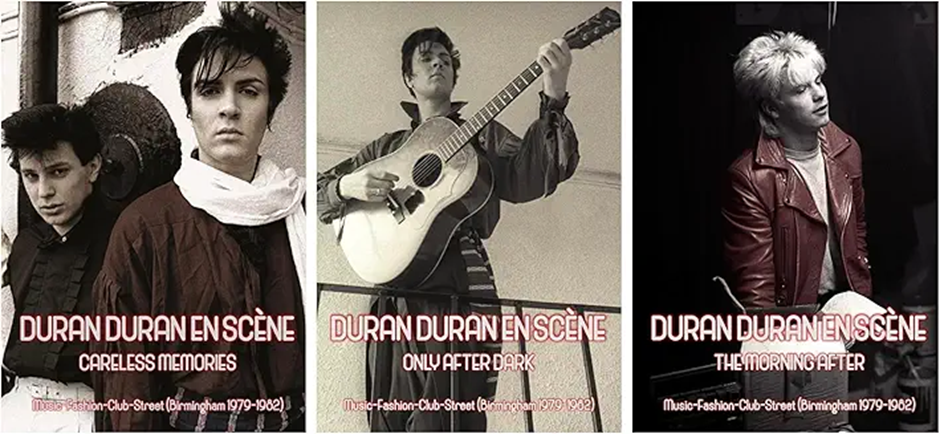
MKD: I’m so Proud of my late brother’s work! Paul started snapping photos in his late teens. He worked at an electrical store in Brum that sold cameras, so he bought one and there was no stopping him. Like myself, Paul was a very sociable person. He loved clubbing, he loved live music, and he soon earned a reputation as an amazing photographer, and all the local bands wanted to do sessions with him.
Paul was always out on the scene, he captured so many candid shots, snapping everyone and everything around him. He soon started getting commissions from music magazines and style magazines which gave him the opportunity to photograph all the creatives on the scene. He was sharing a house with Jane Kahn and they were good friends, so he always photographed Jane and Patti.

Paul was always around the Rum Runner and other clubs like the Holy City Zoo. He was commissioned by “New Sounds New Styles” a popular music and style magazine of the time, to photograph Duran Duran, this lead to many more sessions with the band in London and Chipping Norton studios where they recorded their first hit Planet Earth. This treasure trove of photos can be found in his photobook series “Duran Duran En Scène.” Paul was a very charming, handsome and likeable guy, so everyone loved working with him. Mulligan, from the band Fashion, described him as being like the Angel Pygar from the film “Barbarella.” Paul’s work can be seen on pauledmondgallery.uk
DG Q: Cowboy Guardian Angel’ is such a deeply moving piece—an achingly beautiful, soul‑stirring tribute to your late husband, Leif Kahal, and a song that lingers long after the final note. It’s one of those rare tracks that goes straight to the heart. Could you share more about how it came to life, and the inspiration behind its evocative title?
MKD: When I first met Leif in a bar in Dublin, he spoke like Elvis—he was from Virginia USA, he was wearing a cowboy hat, cowboy boots and spurs! I think I had always dreamed of meeting a cowboy! Leif, or Leify Tree as we fondly call him, left the planet on 24th August 2017. Our life together was something else, we made so much music together as well as bringing up our son and dealing with Leif’s many episodes of serious illness. I think we learned how to appreciate life so much during the periods of respite when he wasn’t ill. We would maximise the time and enjoy each precious moment like there was no tomorrow. I wanted to honour him by writing a song dedicated to him, try and reflect and capture some of the life we shared together. I think of him fondly as our Cowboy Guardian Angel, I like to think he may be protecting us from wherever he is and whatever realm he may be in now! I like to think that he surrounds us with his positive energy! I’m so glad you like this song, it holds a special place in my heart. The guitar on the song is played by lovely Will Crewdson who plays in Adam Ant’s band. Will’s style of guitar on this song is something like Leif would have played.
DG Q: Your collaboration with Martin Watkins, well‑known for his work with Marc Almond, feels like an inspired pairing, the kind of creative match that just makes sense the moment you hear it. How did the two of you first come together, and what drew you into working so seamlessly with one another?

MKD: Martin and I were introduced to each other by our mutual friend , author Clayton Littlewood. Clayton’s novel “Dirty White Boy” became a stage play, and Clayton asked if Martin and I would collaborate and write some songs for the play, that’s how it all began. There is definitely a writing chemistry between myself and Martin. We released an album “Union” which Leif worked and played on too. Leif also played great harmonica as well as guitar. Martin and I are working on new material and we have just released a Maggie and Martin remix CD of “Dream Of Love” with mixes by Kinky Roland, Pete Hammond, Punx Soundcheck and Spatial Awareness.
DG Q: How do you envision the future landscape of your musical path evolving beyond 2026 and onwards?
MKD: I’m always writing and always keen to see where it ends up!!! As mentioned earlier I’m working on new material with Martin. Watch this space!!
DG Q: What’s one thing your fans would never guess about you that you’d be willing to share?”
MKD: my full name and my age!!! But I’d never be willing to share hahaha!!!
DG Q: You’ve achieved so much throughout your remarkable musical career. But tell me… is there an unrealised dream you’ve kept tucked away, waiting for the right moment to bring it into the light. One that lingers in your mind, quietly calling your name?
MKD: It’s not a musical dream as I generally try and realise my musical dreams but I would LOVE to host a travel show! Who knows …
DG Q: If there was one piece of advice you could offer to emerging artists today following in the same path, what would it be?
MKD: Never give up! Believe in yourself! Ignore negative criticism. Do what’s in your heart. Don’t be afraid of what other people think. Don’t be afraid of failing. If you fall down and something you’ve tried fails, pick yourself up again and keep at it!! Try again! Believe in your dreams!! (More than one piece of advice I know!!)
DG Q: What is the one piece of advice you wish someone had shared with you when you started out on your musical career?
MKD: The value of patience! Don’t expect everything you do to be successful but keep the faith and keep on doing what you’re doing! Keep the passion alive and be flexible.
DG Q: To close on a powerful note, is there a single quote or line—your personal compass—that captures the essence of who you are? The one that says, “This is me.”

MKD: I try and live my life in the moment as much as possible, not dwelling on the past or future. I love the words by Omar Khayyam from the Rubaiyat of Omar Khayyam, I’m always quoting them, they ring so true for me, striking a chord. These words have always influenced me deeply and my outlook on living. “Unborn Tomorrow and dead Yesterday, Why fret about them if Today be sweet.”
LINKS:
Website: Paul Edmond Gallery
YouTube: (7) Maggie & Martin - YouTube
INSTA: @maggie_k_de_monde


Comments